Latino Jockeys Fill the Kentucky Derby Field as Immigration Crackdown Worries Racing Industry
Many of the riders in Saturday's Kentucky Derby are immigrants from Latin America, and people in the sport are watching the Trump administration's immigration policies closely.
By Juan Gonzalez ·
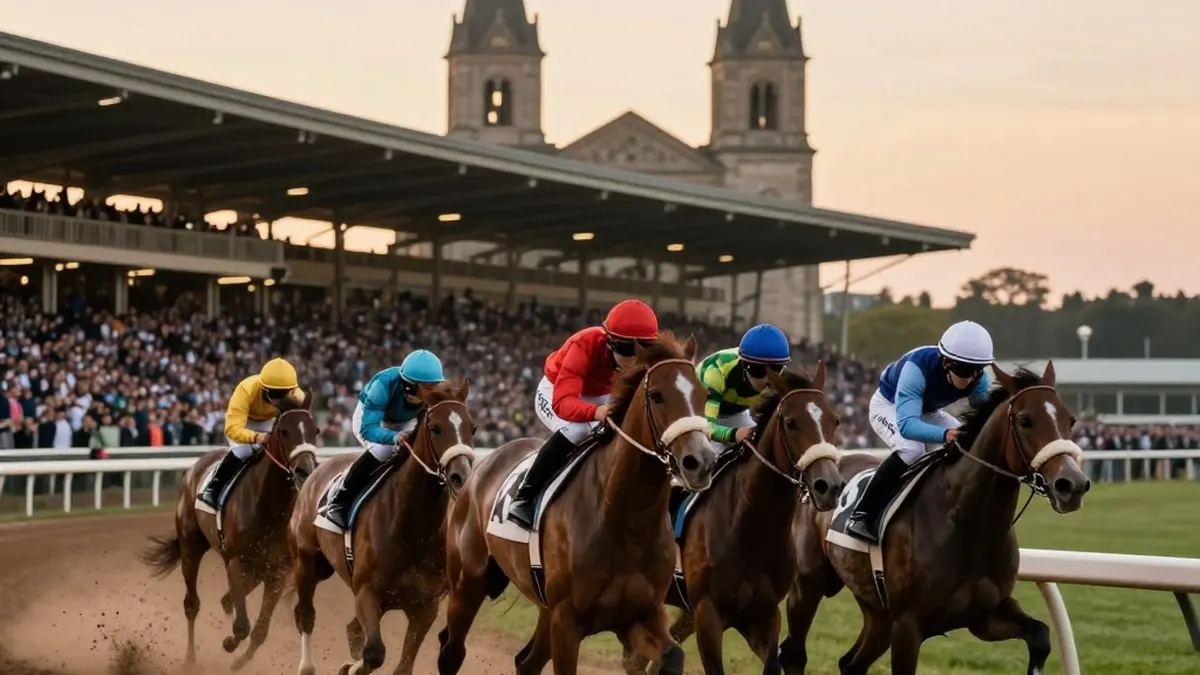
Growing up in Venezuela, Junior Alvarado wanted to be a winning jockey like his father. The 38-year-old started out as what he calls a "backboy" in the racing stables of Barquisimeto, where he first heard about a big race called the Kentucky Derby. Access to other races was limited, he said, but the Derby was the famous one. To have a chance at winning it, he decided, he had to make it in the United States.
Alvarado has ridden in the Kentucky Derby five times and will make his sixth start on Saturday aboard No. 18, a bay horse named Sovereignty. Nineteen jockeys are scheduled to load into the starting gates at Churchill Downs in Louisville. Their horses will cover the 1 1/4-mile dirt track at about 35 miles an hour, competing for $5 million and one of the most sought-after titles in American horse racing.
Most of the riders come from outside the country. The American Business Immigration Coalition estimates that jockeys on visas make up as much as 70% of U.S. competitors. Many come from Mexico, Panama and Venezuela, where established jockey academies operate, while other Latino riders were born in the U.S., including in Puerto Rico. Ramon Dominguez, a retired Venezuelan jockey and member of the U.S. racing Hall of Fame, said horse racing in Venezuela and many other Central and South American countries is as big as American football, and many children dream of becoming jockeys.
As the Trump administration moves to tighten many forms of immigration, people in the industry expect jockeys to be spared from regulatory changes. Some are still feeling the strain of an uncertain status. Foreign riders typically enter on the P visa for athletes or the O visa for people with extraordinary achievement. Immigration attorney Bonnie Smerdon, who has worked with jockeys for almost 10 years, said her visa caseload has grown and that all of her clients' visas have been approved despite the recent crackdowns. One Venezuelan client is in the country under Temporary Protected Status, a program the administration has revoked, putting the work authorization of hundreds of thousands of immigrants at risk. Alvarado called the denial of such opportunities "heartbreaking" and said he knows jockeys whose status is unresolved.
Mindy Coleman, general counsel of the Jockeys' Guild, helps riders with their paperwork and said the industry has not been affected so far. Athlete visas are already tricky for jockeys, she said, because each rider can compete for several trainers and on many horses. She and others fear future limits on visas by country of origin or on foreign talent in general. "It takes people from all over the world in order to have this fastest two minutes in sports in Kentucky," Coleman said. She added that many foreign riders are smaller and lighter than the typical American, which helps them in competition, and that schools in places like Panama develop strong talent.
Gabi Kuenzli, a University of South Carolina associate professor who specializes in Latin American history and sports, described the sport as "a site of Latino excellence," pointing to winning trainers, owners, jockeys and assistant trainers.
Javier Castellano, 47, rode in Venezuela before coming to the U.S. at 19. He has won 6,000 races and has started in the Derby 16 times, winning in 2023. He first arrived on a tourist visa before hiring a lawyer to handle the paperwork, and said he faced the same challenges as any immigrant, including a new language, culture and food. He will ride No. 20, Owen Almighty. Martin Garcia, 40, who rides No. 1 Citizen Bull in his fourth Derby, is from Veracruz, Mexico. Garcia said he entered the country illegally about 15 years ago but is now a citizen.
Ahead of the race, the Louisville Hispanic Chamber of Commerce honored three Latino jockeys, two of whom are riding this weekend. Emcee Hank Enright said that without the jockeys there would be no Kentucky Derby. Among those recognized was Joel Rosario, who won the race in 2013 and will ride No. 14, Tiztastic. Rosario began riding at 13 in the Dominican Republic and came to the U.S. on a visa about 20 years ago. He told NPR that the early years were difficult, but support from owners and trainers kept him going. He sees his career as an immigrant story and said he has noticed more Latino jockeys over the past two decades.
Source: KJZZ